
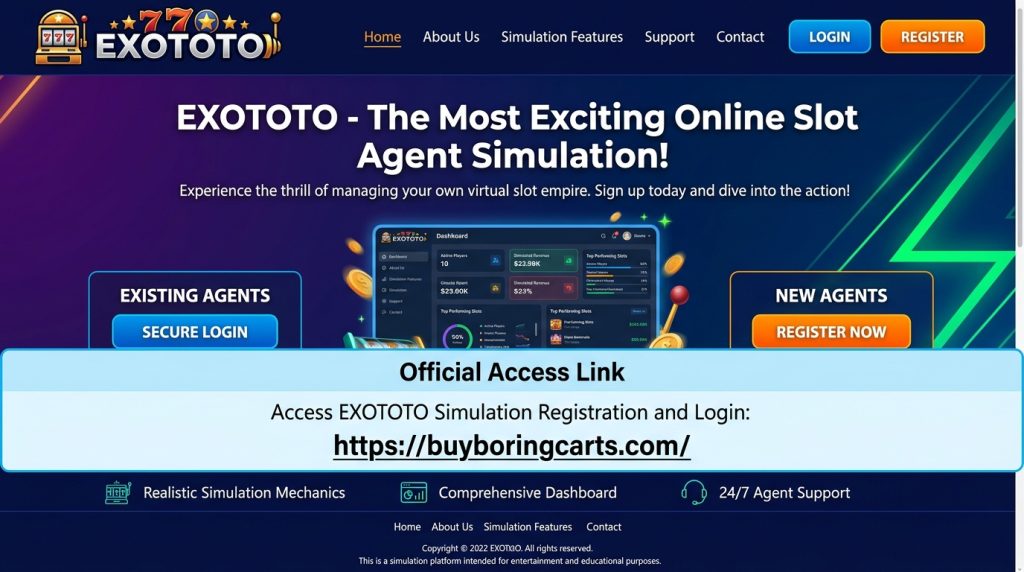
The digital gaming landscape has undergone a massive transformation, shifting from mechanical gears to sophisticated virtual algorithms. At the heart of this evolution is the slot simulation—a tool used by developers, mathematicians, and enthusiast players to understand how modern games calculate payouts, handle risk, and engage users. For players exploring platforms like the exototo slot simulation environment, understanding these underlying systems elevates the experience from simple entertainment to a deeper appreciation of gaming technology.
By pulling back the curtain on random number generation, volatility, and mathematical design, we can discover exactly what makes modern digital slot simulations so compelling.
1. The Engine Beneath the Reels: Random Number Generation
Every virtual spin relies on a core technology known as the Pseudo-Random Number Generator (PRNG). Unlike early physical slot machines that depended on the wear-and-tear of mechanical reels, a digital simulation uses complex mathematical formulas to produce long sequences of numbers that simulate true randomness.
When you interact with a simulation login or registration interface, the software immediately begins generating thousands of numerical values per second. The exact millisecond you click “spin,” the PRNG locks onto a specific value. This value corresponds to a precise combination of symbols on the virtual reels. Because each spin is completely independent of the last, concepts like “hot” or “cold” streaks are purely psychological. The math remains entirely unbiased from one click to the next.
2. The Math of Return to Player (RTP) and Volatility
To understand how a slot agent simulation behaves over time, two critical metrics must be analyzed: Return to Player (RTP) and volatility.
- Return to Player (RTP): This is the theoretical percentage of all wagered money that a slot game or simulation pays back to players over a massive sample size (often millions of spins). For instance, a simulation with a 96% RTP is mathematically programmed to retain 4% of the total volume over its operational lifespan, distributing the remaining 96% back to the user base dynamically.
- Volatility (Variance): While RTP dictates the long-term output, volatility dictates the short-term experience. A low-volatility simulation offers frequent, smaller wins, making it ideal for longer, low-risk sessions. Conversely, a high-volatility setting introduces longer dry spells punctuated by the potential for massive, explosive payouts.
Advanced digital environments allow users to tweak these parameters, providing a hands-on look at how changing variance alters the pacing and emotional rhythm of the game.
3. The Psychology of Visual and Audio Feedback
Modern slot design is as much about psychology as it is about mathematics. Game developers utilize advanced sensory feedback to make simulations deeply immersive. Even when playing a simulation link without real-world stakes, the human brain responds remarkably to specific audio-visual triggers.
High-definition animations, cascading reel effects, and dynamic soundscapes that accelerate during a “bonus round” are explicitly designed to create a sense of momentum. A well-known phenomenon in slot design is the “Near Miss”—where a high-value bonus symbol lands just one space off the winning payline. Simulations accurately replicate these events because they trigger the same dopamine responses as an actual win, encouraging the user to keep testing their strategies against the engine.
4. Navigating the Digital Ecosystem Securely
As online platforms become more sophisticated, the infrastructure supporting them must prioritize absolute security and seamless user access. The process of accessing an online slot agent simulation requires robust data management from the very first step.
Modern registration systems utilize end-to-end encryption protocols to ensure that user credentials and simulation profiles remain strictly confidential. Furthermore, optimized login interfaces are built to minimize latency. In a high-speed digital environment where mathematical state calculations happen in fractions of a second, even a minor network delay can disrupt the simulation flow. Reliable platforms ensure their access links are optimized for both desktop browsers and mobile operating systems, maintaining a smooth, uninterrupted connection to the RNG server.
The Future of Simulated Gaming
As we look toward the future, slot simulations are poised to become even more advanced by integrating artificial intelligence and virtual reality elements. AI can analyze a user’s playstyle in real-time, subtly shifting the aesthetic themes or adjusting the interactive elements to match their preferences perfectly.
Ultimately, whether you are utilizing a platform to study mathematical distributions, test a personal betting strategy, or simply enjoy the thrill of the digital roll, understanding the fusion of PRNG mechanics, volatility metrics, and sensory design transforms the way you view the digital screen. The modern slot simulation is a triumph of software engineering—an intricate dance of pure mathematics and creative design built to deliver continuous excitement.
